
Technical Event Production Checklist Turkey
Contents:
- Why the checklist begins with the brief
- What to confirm during a technical site survey
- Audio, video, lighting and staging checks
- Power, network, rigging and safety planning
- Content delivery, rehearsals and show calling
- Proposal comparison table and FAQs
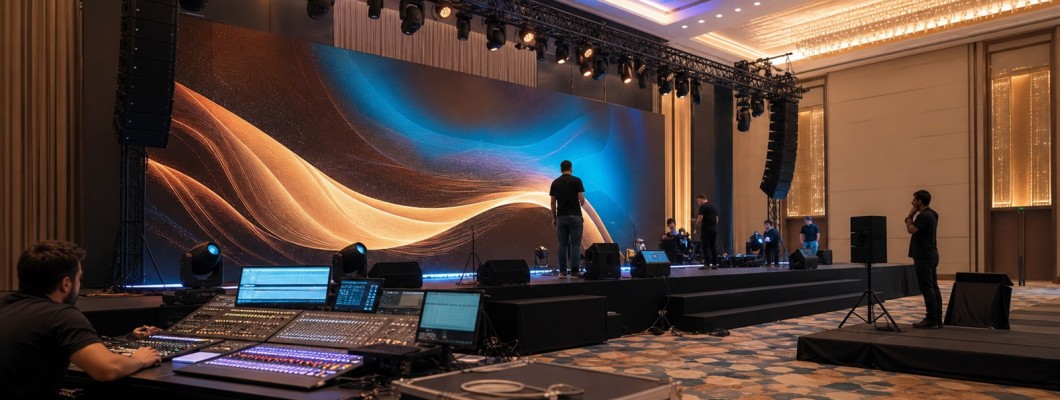
A technical event production checklist Turkey teams can rely on must explain more than which equipment will be hired. It should define how the event will be surveyed, engineered, installed, tested, rehearsed and controlled live. A hotel ballroom, congress centre, coastal resort and heritage venue all create different conditions for access, power, rigging, acoustics and working hours. AYT Events connects those venue facts to the creative idea and running order in one production plan.
This guide helps event managers, agencies and procurement teams compare like with like before approving a supplier. When you need an end-to-end delivery partner rather than a checklist alone, the Event Production Company Turkey guide explains the wider responsibility model.
A Technical Event Production Checklist Turkey Teams Use Starts with the Brief
Translate business objectives into production requirements
Attendance is not a technical brief. The team also needs the programme format, audience layout, speaker movement, languages, remote contributions, broadcast needs, entertainment, product demonstrations and brand content. A reveal and a leadership summit may use the same room, yet require different screen ratios, camera positions, stage depths and cue structures.
Name the technical decision owner
Audio, lighting, video, staging, rigging, power, networking and content teams need a written reporting line. A technical director resolves conflicts between departments, while the show caller controls stage, presentation, video, lighting and music cues during the programme. Without that chain of command, a small content or layout change can cause costly rework.
Technical Conditions to Confirm on the Venue Survey
Venue photographs do not replace a measured survey. Record room dimensions, clear ceiling height, columns, sightlines, loading doors, lift dimensions, storage, backstage space, permitted work periods and noise restrictions. “AV available” does not confirm the model, quantity, operator, access time or whether the equipment is included in the agreed rate.
- vehicle access, loading route and empty-case storage;
- approved rigging points, load limits and house-contractor rules;
- three-phase supplies, distribution positions and generator changeover;
- dedicated wired internet, tested bandwidth and a backup connection;
- fire exits, accessible routes, barriers and audience capacity;
- sound transfer from adjacent rooms and simultaneous events.
Design Audio, Video, Lighting and Staging as One System
Speech intelligibility comes first
Loudspeaker design depends on coverage, room surfaces, ceiling height, stage format and audience layout—not just headcount. Specify wireless-frequency coordination, spare microphones, presenter monitors, press feeds and interpretation channels. For a practical view of available systems, explore AYT Events’ meeting equipment service.
Match the screen to the content workflow
LED pixel pitch should reflect viewing distance, while the screen canvas must match presentation and video formats. Playback machines, backups, fonts, codecs, clickers, confidence monitors and countdown displays belong in the content plan. A controlled file-ingest desk and a clear cut-off time protect the live programme from untested last-minute media.
Lighting is both visual and technical
Key light should make speakers look natural to the room and the cameras. Decorative lighting must not reduce screen contrast or wash out projected content. Rigging height, fixture weight, secondary safety, control protocol and emergency states are confirmed before the design is approved.
| Control area | What the proposal should state | Acceptance test |
|---|---|---|
| Audio | Coverage, microphones, mixing, backup and crew | Speech test in every audience zone |
| Video | Display, resolution, playback, cameras and recording | Complete run-through of every presentation and video |
| Lighting | Key light, room looks, control and rigging | Stage check from audience and camera positions |
| Power | Load calculation, distribution, cable protection and backup | System under load and changeover test |
| Crew | Install, rehearsal, show and strike shifts | Named responsibility and communications list |
Power, Network, Rigging and Safety Planning
A power calculation considers startup loads, phase balance, cable distance and separation of critical systems—not just the labels on the equipment. Video, control and audio distribution should be designed deliberately, with UPS protection where it is needed. If a generator is specified, the transfer method must be tested; the phrase “backup power” is not itself a continuity plan.
A rigging drawing should identify approved points, motors, secondary safeties and distributed loads. Cable routes must protect guest circulation, service paths and wheelchair access. The risk assessment, emergency communications plan and authority to pause the show are briefed to the operating team before doors open.
Content Delivery, Technical Rehearsal and Show Calling
The production schedule should show content deadlines, load-in, system checks, speaker rehearsals, a full dress run, doors and load-out on one timeline. Every file needs a version name and an approver. If a presentation changes, the process must state who updates playback, interpretation, lighting and stage management.
A full run-through tests more than speeches. It checks walking time, microphone handovers, video starts, scene changes, awards order, music endings and a shortened emergency version of the programme. The show caller works from the approved running order and gives concise cues over a shared communications system.
How to Compare Technical Production Proposals
The lowest total is meaningless when the scopes differ. Compare installation time, transport, rigging, power, operators, rehearsals, overtime, travel, content support, backup systems and strike conditions line by line. Exclusions and client responsibilities should be just as visible as included equipment.
AYT Events evaluates the technical survey, creative objective and programme flow together. A single responsibility matrix closes gaps between the venue, client, content agency and production departments, so the budget pays for dependable delivery rather than an impressive-looking equipment list.
Frequently Asked Questions
Is the hotel’s in-house AV package enough?
It may be sufficient for a simple meeting. Confirm models, quantities, coverage, operators, access hours, content formats and redundancy before accepting it for a more demanding programme.
When should the technical survey happen?
Ideally before the venue contract becomes unconditional. If loading, rigging or stage constraints alter the budget, the client still has time to negotiate or compare another room.
Why is a full technical rehearsal necessary?
Individual systems can pass their own checks while the transitions between people, media and technology still fail. A full run tests those dependencies in the real programme order.
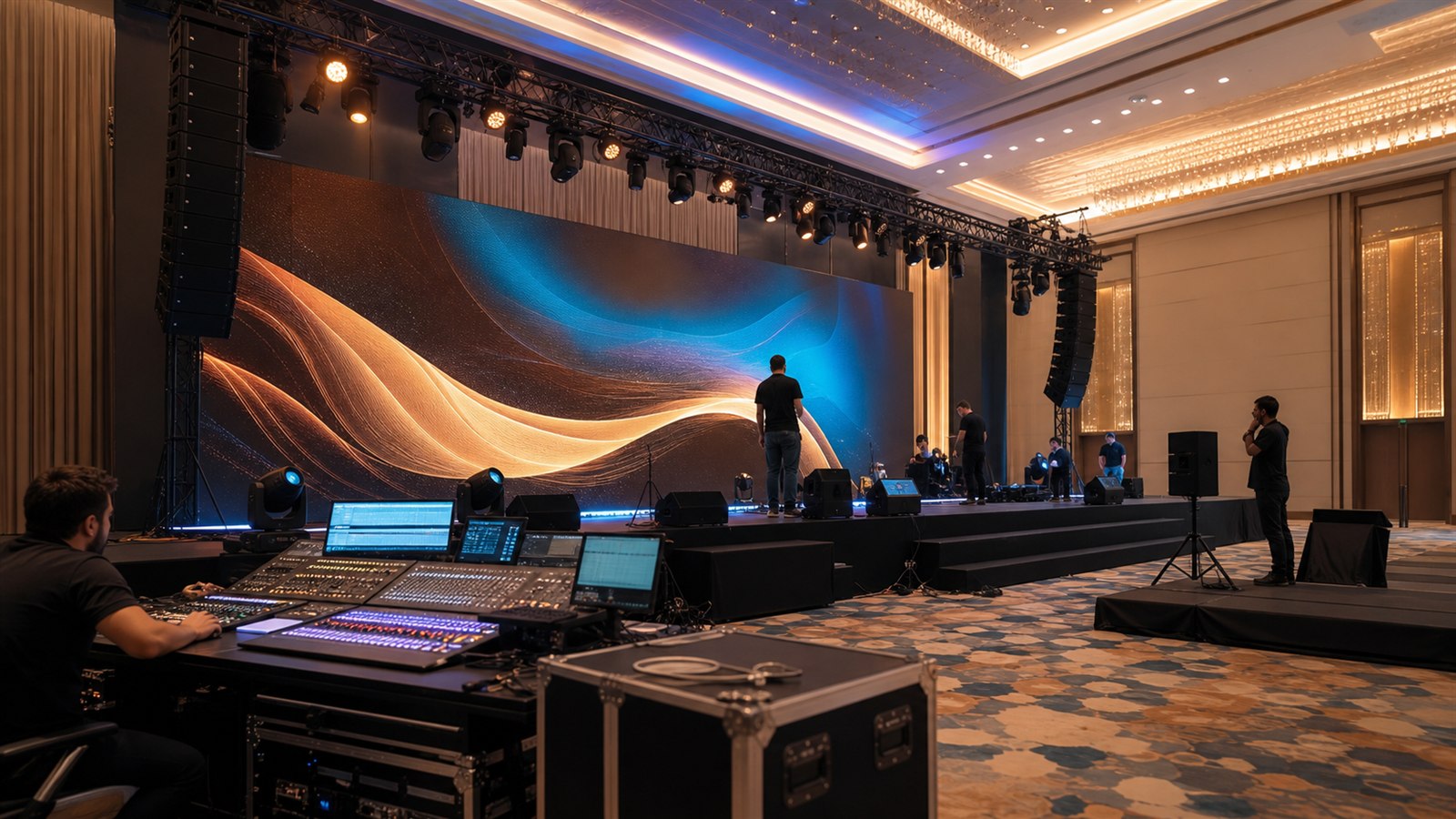
Audio, lighting, video, staging and the control desk working from one technical rehearsal plan.
Selected AYT Events ReferencesExplore the range of brands behind our corporate event and production experience. | |
 |  |
 |  |
 |  |
| View all references → | |
See AYT Events projects on InstagramDiscover stage builds, technical rehearsals and live event delivery. Open @ayt.events on Instagram → |
A disciplined technical event production checklist Turkey programme turns creative ambition into a safe build, a complete rehearsal and a controlled live show. Share your venue, programme format and technical expectations with the AYT Events team so the delivery scope is clear before the equipment list is approved.