
Event Production Company Turkey
Contents:
- What an event production company in Turkey is responsible for
- Turning the creative brief into a technical design
- Sound, lighting, video and staging systems
- Rehearsals, show calling and live control
- Multi-city logistics, safety and contingency planning
- How to compare event production proposals
A professional event production company Turkey partner converts a creative idea into a safe, buildable and precisely controlled live environment. The work covers far more than equipment rental: it connects technical design, venue conditions, content, crew, logistics, rehearsals and show calling. AYT Events develops this production structure around the event objective, ensuring that every technical choice has a clear purpose in the audience experience.
Turkey offers a wide range of venues, from hotel ballrooms and congress spaces to heritage settings, coastal resorts and outdoor locations. Each environment brings different access, power, rigging, sound and operating conditions. Early technical planning allows the creative ambition to remain strong while the delivery plan stays realistic, transparent and ready for change.
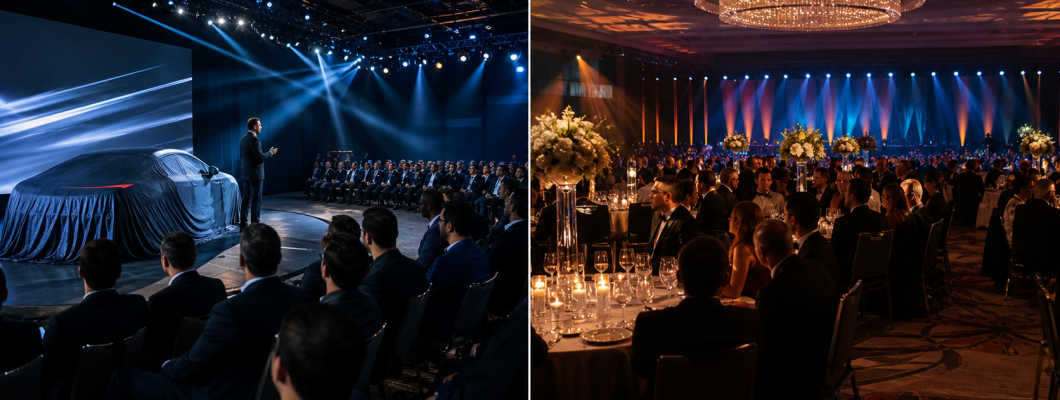
AYT Events production capability — evidence from real event settings
AYT Events has operated from Antalya since 2005 and supports event production across Turkey. The scope can connect stage, sound, lighting, LED and video systems, content playback, technical crews, rehearsals, show calling, logistics, installation and dismantling through one production plan.
 Technical equipment and control for a live event environment.
 LED-led stage production in an Istanbul event setting.
 Multi-screen playback and visual content control.
Request a production proposal → · View AYT Events production photographs →
What Does an Event Production Company Turkey Team Manage?
Production management versus equipment supply
Equipment supply answers the question of what hardware is available. Production management answers how that hardware, the venue, the content and the people will work as one show. The production manager coordinates drawings, schedules, technical departments, supplier interfaces, approvals and on-site decisions, providing continuity from the first survey to the final load-out.
A defined chain of technical responsibility
Live events need clear ownership across audio, lighting, video, staging, rigging, power, communications and content playback. Department leads report through a technical director or production manager, while the show caller controls cues during the programme. This structure prevents informal decisions from creating conflicts between systems or delaying critical work during setup.
Documentation that keeps teams aligned
A dependable production pack normally includes scaled plans, equipment specifications, power information, rigging requirements, crew schedules, content deadlines, a production timetable and a detailed running order. Version numbers and approval status matter because several documents may change at the same time. A shared document register ensures that the venue, agency, client and technical teams are building from the current information.
From Creative Brief to Technical Production Design
Clarify the audience and content format
Technical design begins with what the audience must see, hear and feel. Attendance, room layout, presentation style, speaker movement, languages, remote connections, entertainment and broadcast requirements all shape the solution. A product reveal needs different cueing and scenic control from a leadership conference, even if both programmes use the same venue.
Survey the venue before final specification
The technical site survey checks room dimensions, ceiling structure, loading access, storage, noise limits, power, network availability, fire routes and working hours. It should also record obstacles that affect sightlines or cable routes. Photographs are helpful, but measured plans and written venue confirmation are essential when equipment, structures and crew schedules depend on exact conditions.
Balance design ambition, budget and build time
A strong producer explains the operational effect of each creative decision. A wider screen may change the stage depth; a suspended feature may require additional engineering; a complex scenic finish may need more workshop and installation time. Presenting options with cost, visual value and programme impact enables the client to make informed choices without weakening the central idea.
The design phase should resolve these core outputs:
- scaled floor plan, stage elevations and audience sightlines;
- audio coverage, microphone and interpretation requirements;
- screen format, playback, presentation and camera workflow;
- lighting positions, show looks and venue ambience;
- power, rigging, networking, backstage and control locations;
- build schedule, crew call times and content delivery deadlines.
Design reviews should bring creative, content and technical stakeholders into the same conversation. A rendered stage may communicate the visual direction, while an annotated technical drawing exposes dimensions, access and system dependencies. Reviewing both prevents aesthetic approval from being mistaken for production approval and gives the client a clear record of what will actually be installed.
Sound, Lighting, Video and Stage Production in Turkey
Design sound for speech and programme dynamics
Clear speech is the foundation of most corporate events. The system must provide even coverage without overwhelming front rows or leaving distant seats behind, while microphone selection should suit presenters, panels and audience questions. Music, performance and video playback may require additional system capability, so the audio design should follow the complete running order rather than a generic room package.
Use lighting to guide attention and support cameras
Event lighting shapes focus, atmosphere and the way people and scenic elements appear on camera. Key light for speakers, branded colour, audience illumination, architectural treatment and performance effects need separate consideration. Programming useful looks before rehearsal gives the show team a reliable base, while cue-specific changes can then be refined with content and presenters.
Coordinate screens, content and playback
Screen size and resolution should be selected for viewing distance, room shape and content type. Presentation ratios, font sizes, video codecs, remote feeds, confidence monitors and backup playback must be confirmed before show day. A managed content desk checks files, labels final versions and prevents last-minute material from entering the show without technical review.
| Department | Primary objective | Common control point |
|---|---|---|
| Audio | Consistent intelligibility and balanced programme sound | Coverage plan and microphone workflow |
| Lighting | Visual focus, atmosphere and camera-ready faces | Fixture plan and programmed show looks |
| Video | Readable content and dependable playback | Signal flow, file checks and backup system |
| Staging | Safe access and coherent scenic presentation | Engineering, dimensions and finish approval |
AYT Events can combine production planning with its meeting equipment services, allowing the equipment specification to follow the show design rather than being treated as a separate purchase.
Rehearsals and Live Show Control by an Event Production Company Turkey
Build a running order that departments can use
A client agenda lists sessions and speakers; a production running order explains how each moment happens. It records timing, stage action, audio, lighting, screen content, video, presenter notes and standby calls. The document should also show decision points and flexible sections so the show caller can recover time without damaging essential content.
Use rehearsals to remove uncertainty
Rehearsals test speaker routes, microphones, presentations, videos, stage furniture, lighting cues and communication between departments. They also reveal content that is too long, unclear handovers and practical issues that drawings cannot show. Priority should be given to complex transitions, senior speakers, live demonstrations and sequences involving several technical systems.
Protect the live programme with communication discipline
During the show, department leads need a dedicated communication channel and one recognised cueing authority. Standby and go calls should be concise, while non-essential conversation stays away from the show channel. If the programme changes, the producer confirms the decision, communicates the revised sequence and checks that content, speakers and technical departments are ready before proceeding.
Logistics, Safety and Contingency Across Turkey
Plan freight and crew around venue access
Production logistics depend on where equipment originates, when the venue becomes available and what access the building provides. Truck size, loading permits, dock schedules, lifts, storage and security checks can change the installation plan. Crew travel, accommodation and rest periods also need to be built into the schedule, particularly when a programme moves between Turkish destinations.
Integrate safety into the production process
Risk assessment should accompany the design rather than appear after equipment arrives. Structures, suspended loads, electrical distribution, cable management, work at height, special effects and public access require competent supervision and venue approval. Emergency routes and fire equipment must remain clear throughout build, show and dismantling, including backstage areas that guests do not see.
Design meaningful backups
Backup does not mean duplicating every item. It means identifying systems whose failure would stop the event and providing an appropriate alternative, such as spare microphones, redundant playback, backup presentation files, replacement signal paths or a simplified show state. The response plan should state who decides to switch systems and how the change will be communicated without confusing the stage or audience.
How to Select an Event Production Company Turkey Partner
Request a technical response to the brief
A credible proposal should explain the recommended design, not simply list quantities. Look for a clear understanding of the venue, audience, content and schedule, supported by relevant assumptions and exclusions. Alternative options are useful when they show the effect on performance, installation time and cost rather than offering unexplained equipment substitutions.
Compare like-for-like production scope
Check whether quotations include transport, setup, rehearsals, show operation, dismantling, crew travel, engineering, content support and venue-mandated services. Confirm operating hours and overtime rules, because a lower initial figure may rely on an unrealistic schedule. The same review should cover tax, currency, payment milestones, cancellation conditions and responsibility for client-supplied content.
Evaluate the team behind the technology
Modern equipment matters, but experienced people determine how it performs under live conditions. Ask who will act as producer, technical director, department leads and show caller, and confirm their participation during planning as well as show day. The team should communicate clearly with international stakeholders, document decisions and remain calm when the programme changes.
Frequently Asked Questions
Can AYT Events manage the complete technical production scope?
Yes. The confirmed scope can bring stage, audio, lighting, LED and video, content playback, technical crews, installation, rehearsals, live operation and dismantling into one coordinated production plan. Final equipment, staffing and responsibilities are defined against the venue, programme and approved brief.
Can AYT Events work with an international agency or in-house event team?
Yes. AYT Events can operate as the Turkey-side production partner while the international agency or client team retains creative and stakeholder leadership. Drawings, specifications, schedules, approvals and show documents create a shared working language before the teams arrive on site.
What information is needed for an initial production proposal?
Share the event date, city, venue or venue options, audience size, room layout, stage and screen expectations, content formats, interpretation or broadcast needs, rehearsal window, access hours and known budget framework. Early plans or technical riders are useful when available.
Which Turkish destinations can be supported?
Production can be planned for Istanbul, Antalya, Bodrum, Izmir, Ankara, Cappadocia and other Turkish destinations, subject to venue access, schedule, crew and equipment availability. Each proposal should account for local transport, loading, working-hour and contingency conditions.
When the production brief is centred on a Mediterranean resort programme, the Event Company Antalya guide adds venue sourcing, destination logistics, company credentials and guest-experience criteria to this technical framework.
For programmes where technical production must connect with budget, delegates and content under one management structure, see the Corporate Event Management Turkey guide.
Use our new technical event production checklist for Turkey to verify the venue survey, audio, lighting, video, power, rigging, rehearsals and backup plan before delivery.
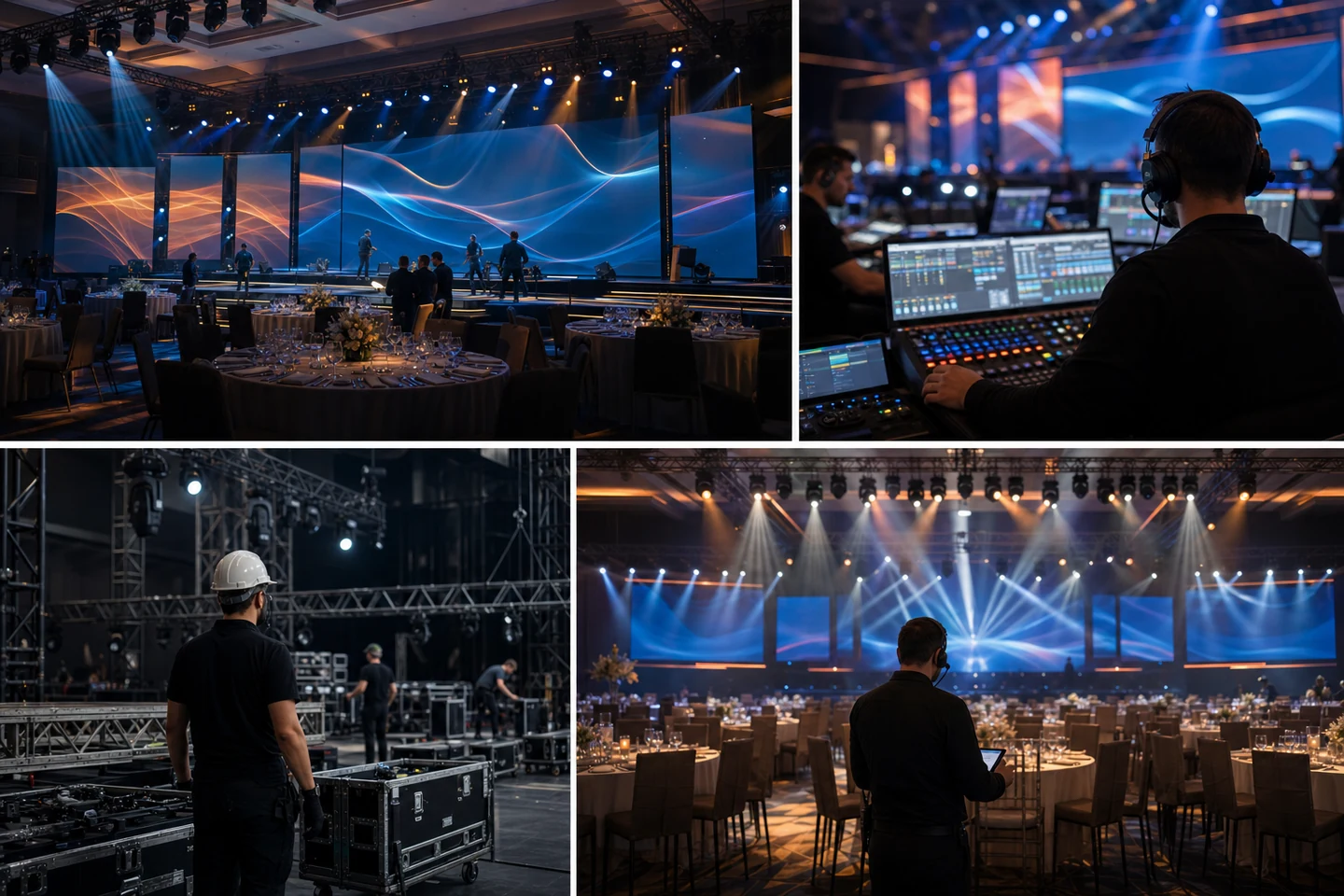
Professional event production connecting stage design, technical systems, rehearsals and live show control.
Selected AYT Events ReferencesExplore brands from different industries that have worked with AYT Events and view the wider project mix. | ||
 |  | |
 |  | |
 |  | |
| ||
See AYT Events projects on InstagramVisit @ayt.events for stage builds, gala programmes, corporate meetings and live moments from event delivery.
|
The right Event Production Company Turkey partner turns creative ambition into a safe, buildable and controlled live environment. Share your venue, audience, programme format and technical requirements with AYT Events to develop the production plan.